
Asphalt vs. Concrete Driveways: Which Is the Better Investment?
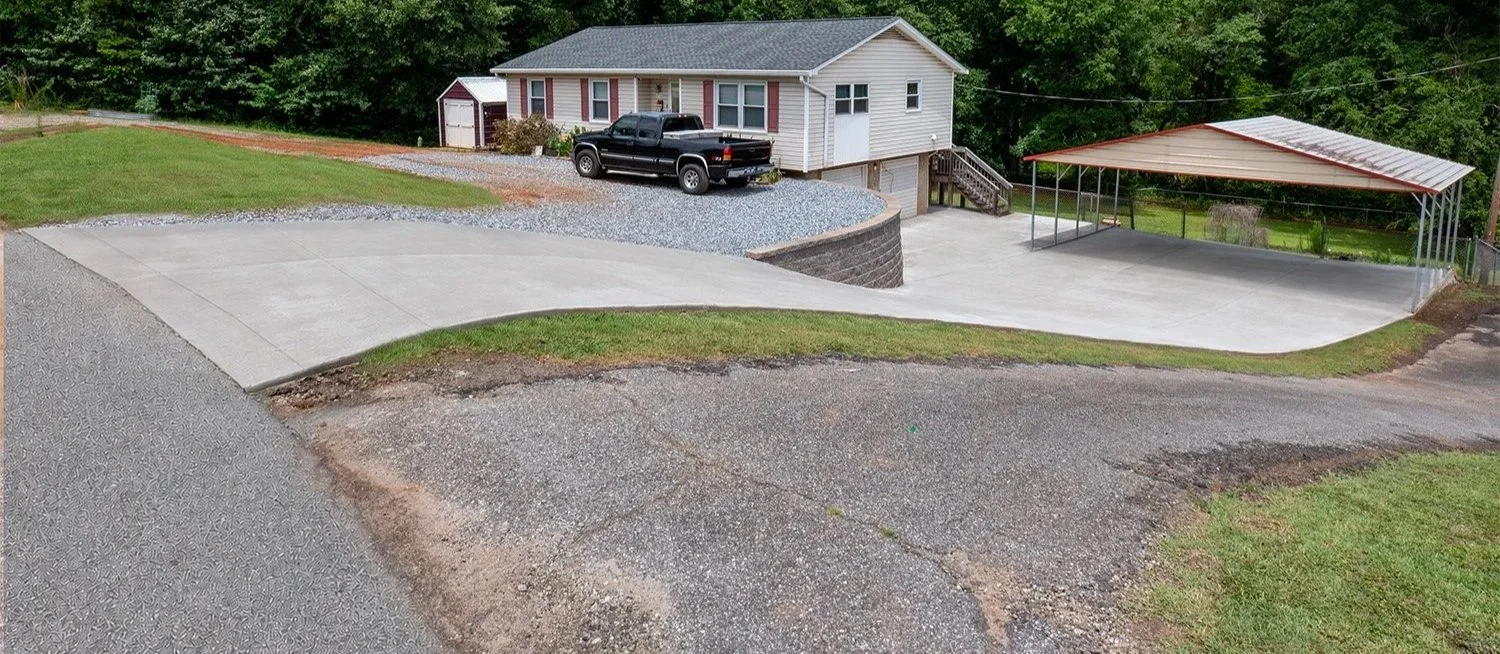
If you're planning a new driveway, one of the biggest decisions you'll make is whether to choose asphalt or concrete. Both materials have their place, but they differ significantly in appearance, lifespan, maintenance requirements, and long-term value.
At CLAD Outdoor Designs, we specialize in concrete driveways because we've seen firsthand how well they perform over time. While asphalt can be the right choice in certain situations, concrete offers advantages that make it the better investment for many homeowners.
Appearance
One of the first things people notice when they pull up to a home is the driveway. It occupies a large portion of your front yard, making it a major contributor to curb appeal.
Concrete provides a clean, finished appearance that complements almost any style of home. It also offers nearly unlimited design possibilities. Homeowners have a wide range of design options with concrete driveways. A traditional broom-finished surface offers a clean, timeless appearance, while exposed aggregate adds texture and visual interest. Stamped concrete can mimic the look of stone, brick, or other premium materials and can be colored to better match the home’s exterior. Decorative borders and integrated paver accents can further customize the design, creating a driveway that is both functional and uniquely tailored to the property.
Asphalt offers very little customization. Nearly every asphalt driveway looks the same, and while it starts out with a deep black finish, it gradually fades to gray as it ages.
For homeowners who want their driveway to enhance the appearance of their property rather than simply serve as pavement, concrete offers far more flexibility.
Lifespan
One of concrete's biggest advantages is its longevity.
A properly installed concrete driveway commonly lasts 30 to 40 years or more with basic maintenance. Asphalt driveways generally have a shorter lifespan, often requiring replacement after 15 to 25 years depending on climate, usage, and maintenance.
While both materials eventually wear out, concrete typically delivers decades of additional service before replacement becomes necessary.
Maintenance
Both asphalt and concrete require some maintenance, but the type and frequency are different.
Asphalt should be seal coated approximately every 2 to 5 years to protect it from oxidation, moisture, and UV damage. Without regular sealing, it becomes brittle, fades, and develops cracks more quickly.
Concrete does not require routine seal coating to remain structurally sound. Decorative concrete may benefit from occasional resealing to preserve its appearance, but standard concrete driveways require significantly less ongoing maintenance.
Both materials can develop cracks over time due to soil movement or freeze-thaw cycles, but concrete generally demands less routine attention throughout its life.
Heat Resistance
If you've ever walked barefoot across an asphalt parking lot in the summer, you've felt just how hot asphalt can become.
Because asphalt is black, it absorbs a significant amount of solar heat. During hot weather it can soften slightly, making it more susceptible to scuffs, indentations from heavy vehicles, and damage from kickstands or trailer jacks.
Concrete reflects more sunlight and remains noticeably cooler during the summer months. It also maintains its structural rigidity in high temperatures.
Strength
Concrete is an extremely strong paving material that performs exceptionally well under the weight of passenger vehicles, SUVs, pickup trucks, RVs, and trailers.
While asphalt is flexible, concrete's higher compressive strength helps it resist rutting and deformation over decades of use.
When installed over a properly prepared base, a concrete driveway is built to withstand years of daily traffic.
Long-Term Cost
One reason homeowners choose asphalt is its lower initial installation cost.
However, the upfront savings don't always tell the whole story.
When you factor in periodic seal coating, more frequent repairs, and a shorter overall lifespan, asphalt often costs more over the lifetime of the driveway than many homeowners expect.
Concrete generally costs more to install, but because it lasts longer and requires less maintenance, many homeowners find that it offers better long-term value.
Rather than replacing a driveway twice over several decades, many concrete driveways continue performing well with only minor maintenance.
The Bottom Line
Both asphalt and concrete can provide a functional driveway, but they offer very different long-term experiences.
If you're looking for the lowest initial price, asphalt is often the more affordable option. If you're looking for a driveway that lasts longer, requires less maintenance, offers more design flexibility, and adds lasting curb appeal to your home, concrete is hard to beat.
At CLAD Outdoor Designs, we build concrete driveways designed to serve homeowners for decades. From traditional broom-finished concrete to decorative exposed aggregate and custom borders, we help homeowners create driveways that are both durable and beautiful.
If you're considering replacing your driveway or building a new one, we'd be happy to help you explore the options and find the solution that's right for your home.