
If you've been thinking about adding a concrete patio to your home, you've probably already done some searching online and come away more confused than when you started. Pricing guides vary wildly, and most of them skip over the details that actually drive the cost. So let's talk about what a patio really costs in 2026, and more importantly, why it costs what it does.
It Starts Before the First Truck Arrives
One of the biggest misconceptions homeowners have is that they're paying mostly for labor and concrete. The truth is that a significant portion of your project cost happens before a single yard of concrete gets poured.
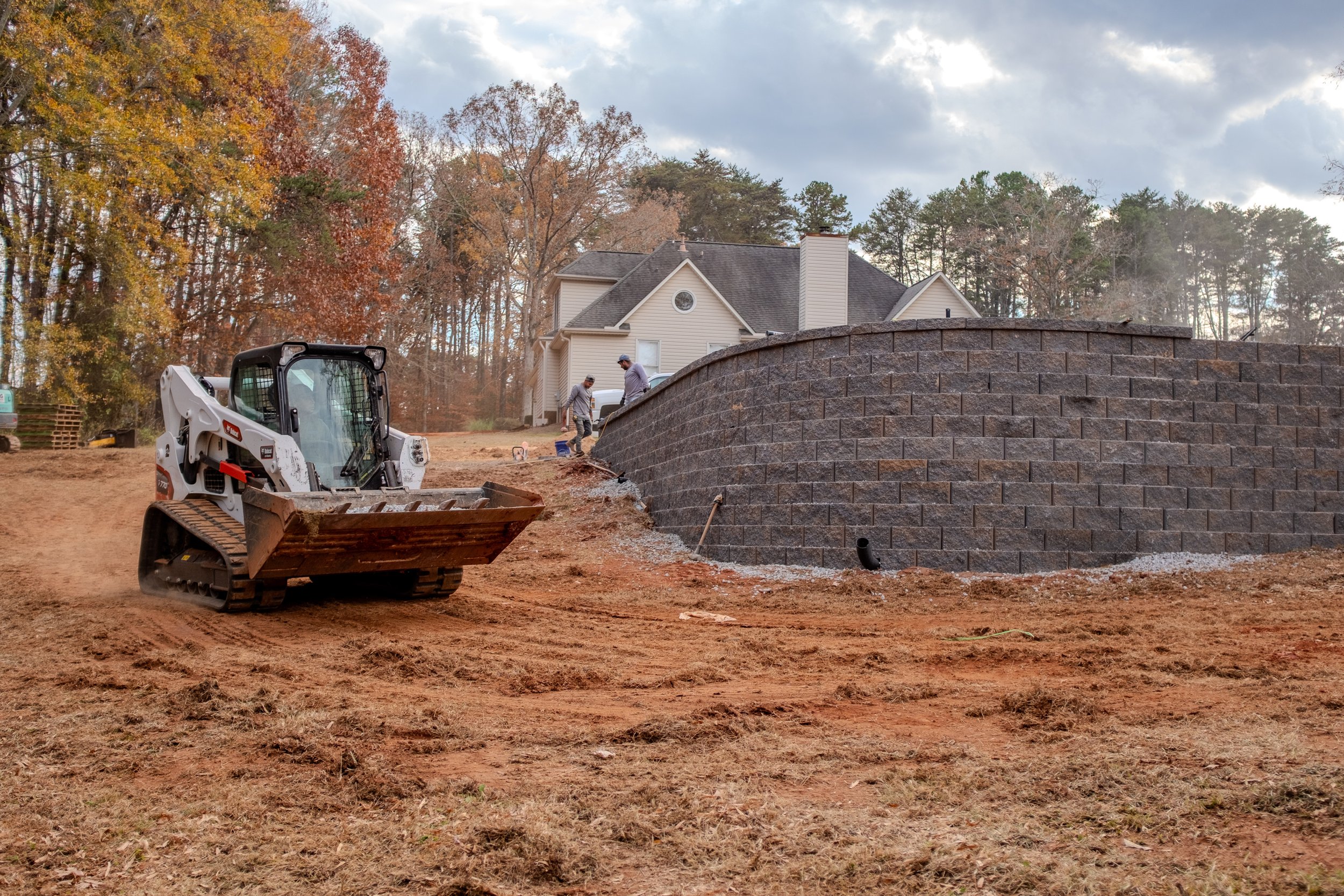
Site preparation is where the foundation of a lasting patio gets built. The ground beneath has to be excavated, graded for proper drainage, and compacted so the slab has a stable base. By the time the truck rolls up, skilled labor and materials have already been at work for a while.
So What Does the Concrete Itself Cost?
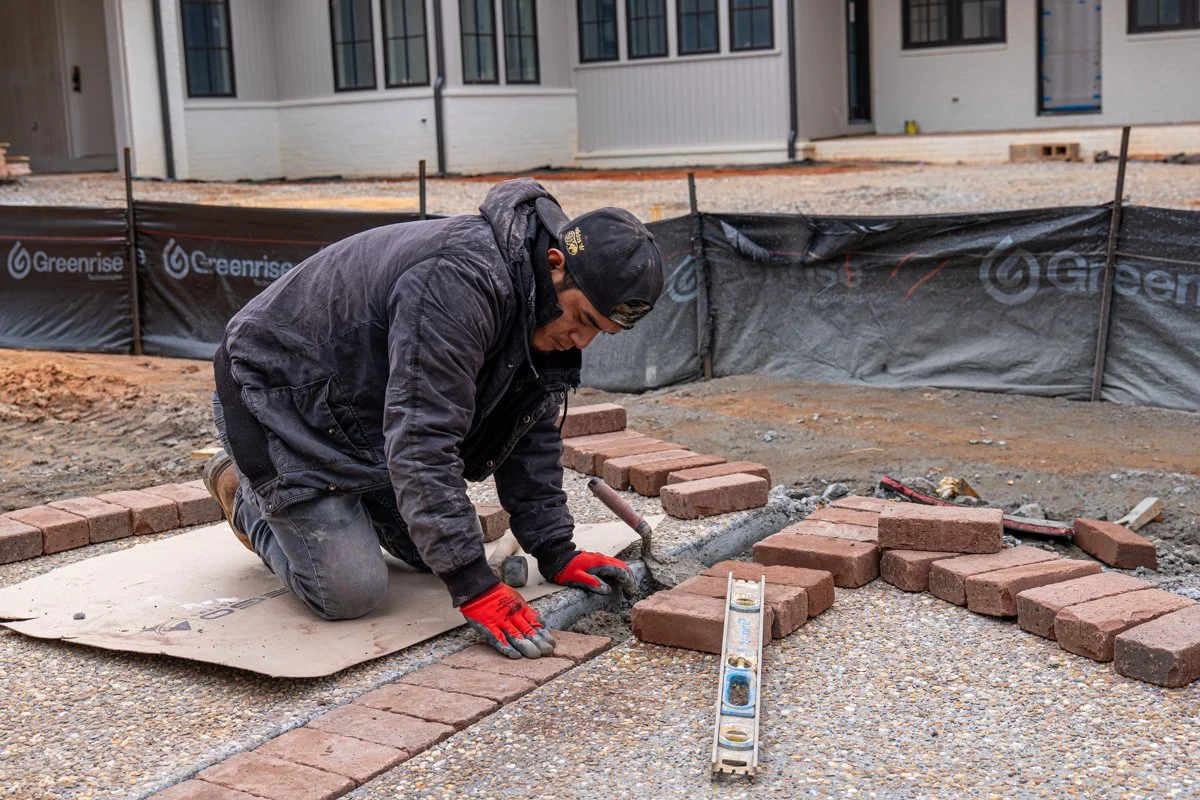
Pavers bordering exposed aggregate concrete
How you want your concrete’s surface to look opens up a range of options worth considering. A broom finish is clean, slip-resistant, and the most economical choice. Exposed aggregate brings natural texture and color into the surface. Stamped concrete can mimic flagstone, pavers, or other materials entirely, transforming the look of your space into something that feels more custom than poured concrete. Colored concrete lets you tie the patio into your home's exterior palette. Each of these finishes adds to the overall investment, but they also add personality and visual impact that a plain slab simply cannot offer.
For a standard, no-frills concrete slab patio, most homeowners in the Southeast can expect to spend somewhere between $10 and $12 per square foot installed. A 400 square foot patio typically lands in the $4,000 to $5,000 range as a rough starting point. Add decorative finishing, and that number climbs accordingly.
A Patio Can Be Much More Than a Slab
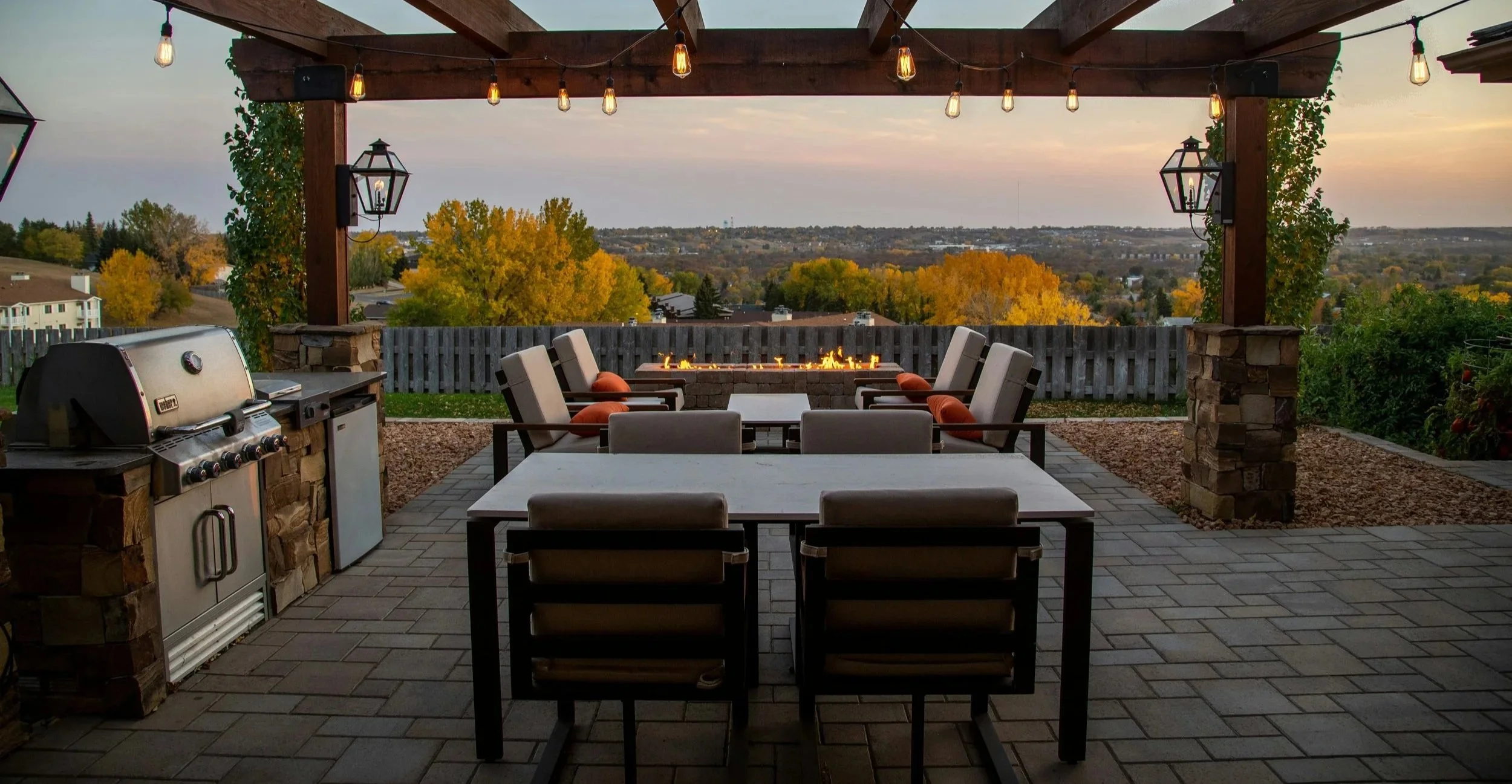
Here is where the conversation gets more interesting. A concrete patio does not have to begin and end with a flat surface. For many homeowners, a patio becomes the foundation of a complete outdoor living space, and the difference between a plain slab and a thoughtfully designed outdoor room is significant, both in terms of cost and value.
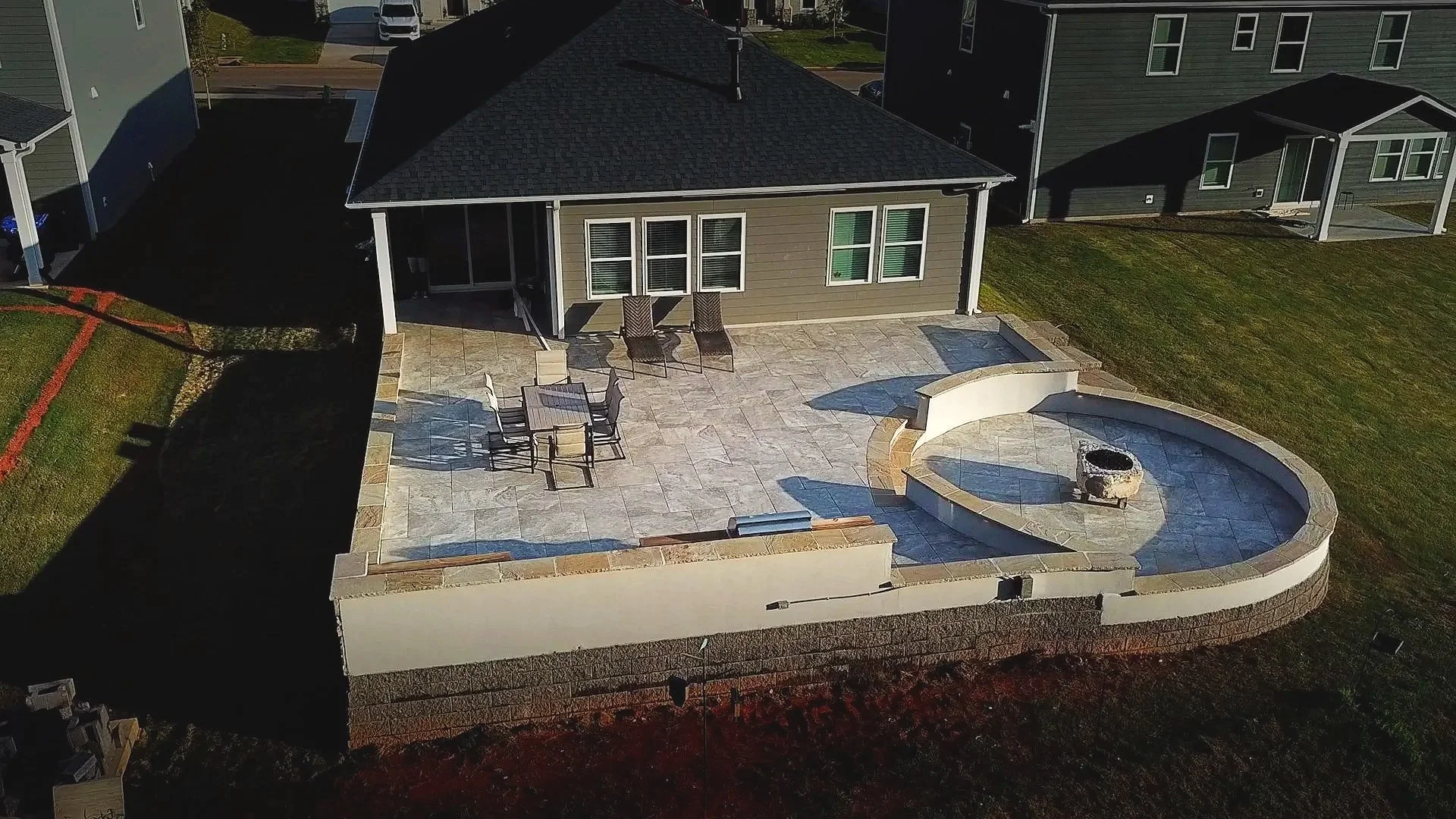
Sitting walls are one of the most popular additions. They define the edges of the space, eliminate the need for freestanding furniture along the perimeter, and give guests natural places to gather. A fire pit, whether a simple round structure or a more substantial built-in feature, becomes the heart of an outdoor space in the cooler months and keeps your patio in use well beyond summer.
Retaining walls are sometimes functional necessities on sloped properties, but they can also be designed to double as seating or to create distinct levels that make the space feel more intentional. An outdoor kitchen takes things a step further, incorporating countertops, a grill station, a sink, and sometimes a built-in refrigerator or bar area. At that level, you are not really talking about a patio anymore. You are talking about an outdoor room.
A project that combines a concrete slab with sitting walls, a fire pit, and a modest outdoor kitchen can range from $25,000 to $60,000 or more depending on the size and materials. That is a wide range, and it reflects how customizable these spaces are. Some homeowners want clean and simple. Others want something that could host a dinner party for twenty people.
Your Patio Is an Investment, Not Just an Expense
It is worth thinking about what a well-designed outdoor living space does to your home's value, because it does quite a bit. According to real estate research, a professionally installed outdoor living space consistently offers strong returns at resale. Estimates from various appraisal and real estate sources suggest that an outdoor living space can return anywhere from 50 to 80 percent of its cost in added home value, and in markets where outdoor living is particularly desirable, that number can climb even higher.
Beyond the appraised value, an outdoor living space makes your home more appealing and more competitive when it comes time to sell. Buyers today actively look for homes that feel complete, and a backyard with a beautiful patio, a fire pit, and an outdoor kitchen is a feature that photographs well, shows well, and stands out in a market full of bare slabs and flat grass.
Put simply, the money you spend on a well-built patio is not gone. Some of it comes back to you when you sell, and all of it improves your daily life in the meantime.
Getting to a Real Number
Every project is different, and the only way to get a number that actually applies to your yard is to have someone come look at it. Slope, drainage, soil conditions, access for equipment, the size of the space, and what you want to do with it all influence the final price.
What we can tell you is that a quality patio is not where you want to find the cheapest bid. The prep work and the concrete work are places where shortcuts show up later, in the form of cracks, settling, and drainage problems that are expensive to fix. A contractor who takes the time to do it right will charge accordingly, and the difference between a patio that lasts thirty years and one that needs repairs in five is almost always in the work you cannot see once the project is done.
Ready to Transform Your Outdoor Space?
Whether you’re planning a simple slab or a fully built outdoor living space, CLAD has the experience to get it done right. Get a quote and see what’s possible for your space.